Dear founders
You built something great. We'll buy it and leave it alone.
We can often move quickly, usually with a simple cash-heavy structure, and we close on a timeline that makes sense for the company. The team stays. The product, service, community, or brand stays. We hold for the long term. You choose your role: keep running it, stay in the loop without the day-to-day, or sail off into the sunset.

Short answer
Does Tiny buy founder-owned businesses?
Yes. Tiny buys profitable founder-owned businesses when the company has real customers, understandable economics, and a team, product, service, community, or brand worth preserving after close.
- Tiny is a direct buyer, not a broker, marketplace, or private-equity fund.
- The usual fit is a profitable business where the founder wants liquidity, succession, or a long-term home.
- After close, the team, brand, and operating rhythm should keep working without forced integration.
Why we exist
We started Tiny because we hated every other option.
After selling one of our most profitable businesses, the price got renegotiated at the last minute, our best people were let go, and the culture we'd spent years building was optimized out of existence. We kept thinking: this can't be how it works. So we built Tiny to be the buyer we wished we'd had.
That was 13 years ago. We're still at it.
“I was extremely pleased with how smooth a transition the acquisition was for our team and the community. Zero disruption and a seamless passing of the torch to Tiny.”

What we look for
You'll know in two minutes if we're a fit.
Profitable today. Real revenue, real margins. Not a pitch deck with projections.
$3M–$50M+ in annual profit. We've bought niche tools and large platforms. Size matters less than quality.
A product people love. Strong retention, organic word-of-mouth, customers who'd miss it if it disappeared.
A team worth keeping. People who'd be hard to replace and harder to let go of.
No CEO required. Stay and run it or move on — your call. If you'd rather go, you don't need a successor lined up; we'll help find the right person, internal or external. We just need a business that runs without you for more than two weeks.
No sketchy stuff. If we'd be embarrassed explaining it to our parents, we'll pass.
What we buy
From DJ software to coffee makers.
We buy all sorts of wonderful businesses. Tiny owns 21 companies across 5 portfolio categories: software, music, e-commerce, design, consumer products, marketplaces, communities, and services.
The common thread is not the category. It is durable profit, customers who care, clean economics, and a team, product, community, or brand worth leaving intact.
Software people run their work on
The useful, boring-in-a-good-way tools customers would be annoyed to lose.
4 examples
Communities with real gravity
Places people come back to because the network, taste, or trust is hard to copy.
3 examples
Commerce plumbing
Themes, reviews, attribution, and storefront tools merchants rely on quietly.
4 examples
Products people evangelize
Simple, beloved things with real customers and a reason to exist.
3 examples
Studios and services with reputation
Teams whose work, taste, or customer relationships have compounded for years.
3 examples
A few very different examples
AeroPress
Consumer Products
The cult coffee maker sold in 60 countries.
Serato
Music & Audio
The largest DJ software in the world.
Letterboxd
Consumer Products
Where 29 million people log and review films.
Dribbble
Design & Creative
Where designers share work and get hired.
MediaNet
SaaS & Tools
Special education software for Arizona schools.
Stamped
E-Commerce
Product reviews and loyalty for online stores.
Creative Market
Design & Creative
Marketplace for fonts, templates, and graphics.
Metalab
Design & Creative
Design agency behind Slack, Coinbase, and Uber.
Wholesale Pet
Consumer Products
Pet supply distributor for stores across the United States.
Norbauer & Co.
Consumer Products
Handcrafted luxury mechanical keyboards.
Know your options
Three buyer types show up at a founder's door.
Each is a different deal with different consequences. We wrote the honest version of all three.
Private Equity
The headline number is fiction, and the equity you keep comes with caveats.
PE often loads your company with debt to finance the purchase, then runs a 3-7 year exit clock. The “$50M deal” becomes $25M after rollover equity, preferred returns, earn-outs, and escrow. Tiny is usually simple and cash-heavy at close.
See how PE deals work →Strategic Acquirer
You could be the next Tumblr, Vine, or MySpace.
Strategics buy you to fill a gap in their product. Once they've absorbed the tech and the talent, the brand gets sunset and customers get a migration email. Tiny keeps every company operating independently.
See what strategics do →Venture Capital
Why gamble everything for a 1% outcome.
VC can give you a crazy valuation on paper, but you've signed up for an all-or-nothing bargain. Each round dilutes you, raises the bar, and leaves you chasing an outcome that works for fewer than 1 in 10 companies.
See why VC math breaks →The VC card is the one founders underestimate. A fund holds a portfolio. You hold one company. That asymmetry, plus the preference stack, is what your equity is actually worth.
The odds, roughly
- 3 in 4
- venture-backed companies never return their investors’ capital.
- ~1 in 100
- reaches the billion-dollar outcome the whole model is chasing.
- Last
- where your common stock sits at exit, behind every liquidation preference.
Buyer paths
Compare Tiny to brokers, marketplaces, PE, and strategics.
Marketplace
Acquire.com, Flippa
Best when you want buyer competition and can run the process yourself.
Tiny is a direct buyer, not a marketplace. You trade auction breadth for certainty, privacy, and a real counterparty.
Broker or advisor
FE International, Quiet Light
Best when maximizing process tension matters more than speed or confidentiality.
Tiny is the buyer at the table. No broker fee is required to start a direct conversation.
Private equity
Traditional financial sponsors
Best when headline price and a planned second sale are the priority.
Tiny is permanent capital. No fund clock, no default resale plan, and no required rollover math.
Strategic acquirer
Large companies, corp dev teams
Best when the buyer wants to integrate the product, team, customers, or roadmap.
Tiny keeps companies independent. The brand, team, product, and operating rhythm can keep compounding.
The real math
What you actually take home
You walk away with $5.5M more by selling to us.
Simple, cash-heavy structures. No games.
The PE offer that looks great on paper
Designed to impress you. Here's what you actually get.
You roll 40% equity — PE has a 2x liquidation preference and an 8% annual preferred return. They get paid first.
At least 6 months of lawyers, accountants, and diligence
1-2% fee the PE firm charges your company at closing
Up-front cash in your pocket
What else you give up
- 40% of your company is still locked up — PE gets paid double before you see a dollar
- You report to a new board for 3–7 years
- Every budget, hire, and strategy change needs their approval
- Monitoring fees get charged to the company during the hold
- 3–6 month process with $500k+ in legal fees
Our offer
Simple terms, fast close, not months of lawyers
Cash in your pocket
What you keep
- The team stays at close — no layoffs as part of the acquisition
- You choose your role — stay, advise, or leave
- Cash at close — earn-outs rare, short, and milestone-based when used
- No monitoring fees charged back to the company during the hold
- Close on your timeline, as quickly as the business allows
Think selling 80% or 100% to PE is better?
We broke down every PE deal structure — the earn-outs, the preferences, the fees they don't mention until page 47. It's all worse.
“When we ran a process to find a new home for our Meteor business, Tiny moved at lightning speed, kept the terms straightforward, and didn't waste any of our time, which was very different from our experience with some other potential acquirers. We're very happy with how our partnership with Tiny has worked out.”

Our process
Four steps, on your timeline.
Introduction
Email hi@tiny.com with a one-paragraph description. We reply within a few business days. If there's a fit, we set up a 15-minute call.
Our Offer
After a short review of basic financials and product context, we send a written offer with a real number, deal structure, and a timeline that works for you. No verbal ranges. No fishing expeditions.
Confirmatory Diligence
We look at the financials, the contracts, and the operations. We focus on the questions that could actually change the deal — not a 90-day fishing expedition designed to retrade the price.
Close
Documents signed, consideration wired, on whatever timeline suits the business. Some deals can move quickly; others take longer because the founder, team, customers, or regulatory details deserve more care. Barring something material in diligence, our goal is not to retrade at the finish line.
“Working with Tiny was one of the most seamless acquisitions I've ever been a part of. Fast, painless and respectful.”

After the deal
The DNA stays.
We hold for the long term. The brand stays, the team stays, the product stays. You can stay on as CEO, transition out over a few months, or step back at close. Your call.
Our portfolio companies run independently. We don't insert ourselves into product decisions. We don't roll up functions into a shared service. We back the operator the business already has, or help find a replacement if the founder is ready to move on.
Most of our companies grow after we buy them. Some grow faster. None get gutted to hit a quarterly number for a fund LP.
Get to know us
Life is too short to sell your beloved company to a guy named Preston who calls your team “human capital.”
You're not just selling a business. You're picking who gets to run it next.
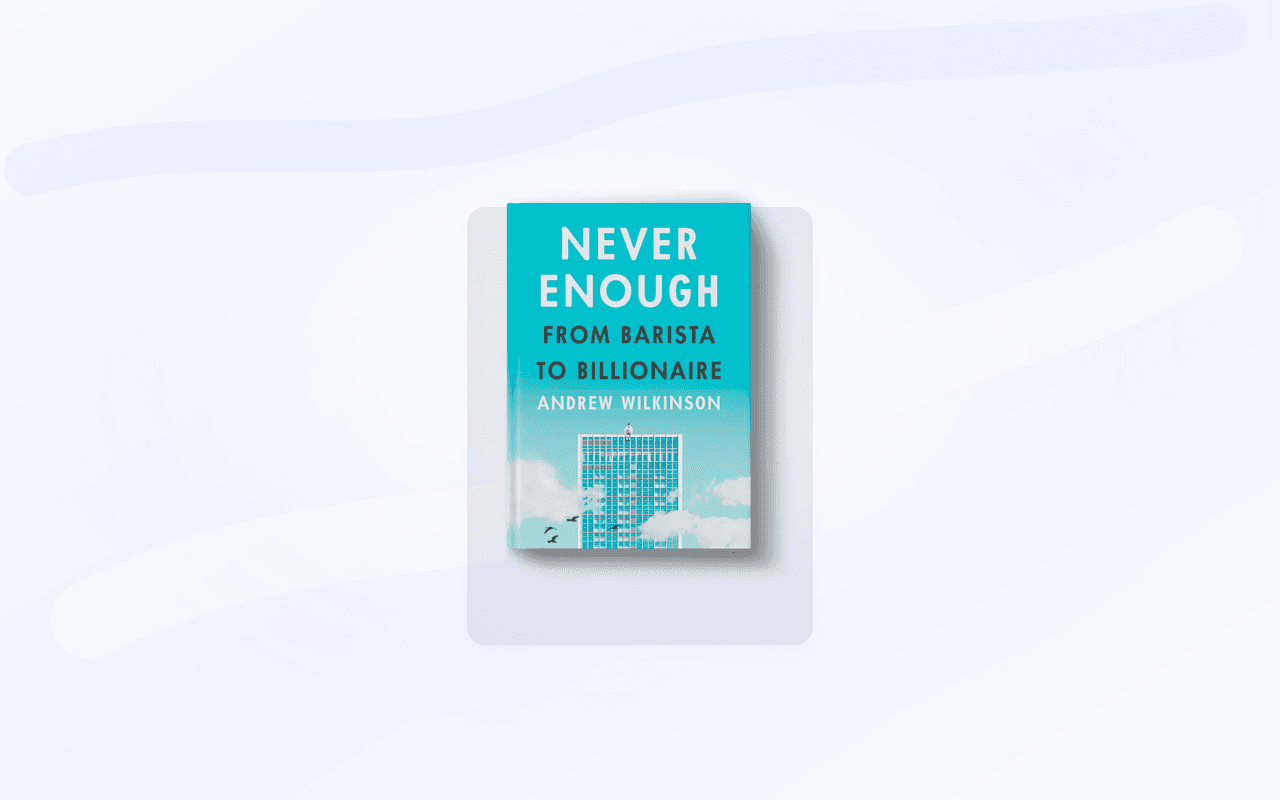
Read the unfiltered version
The sketchy CEO, the $70M cold email, the deal that almost broke us.
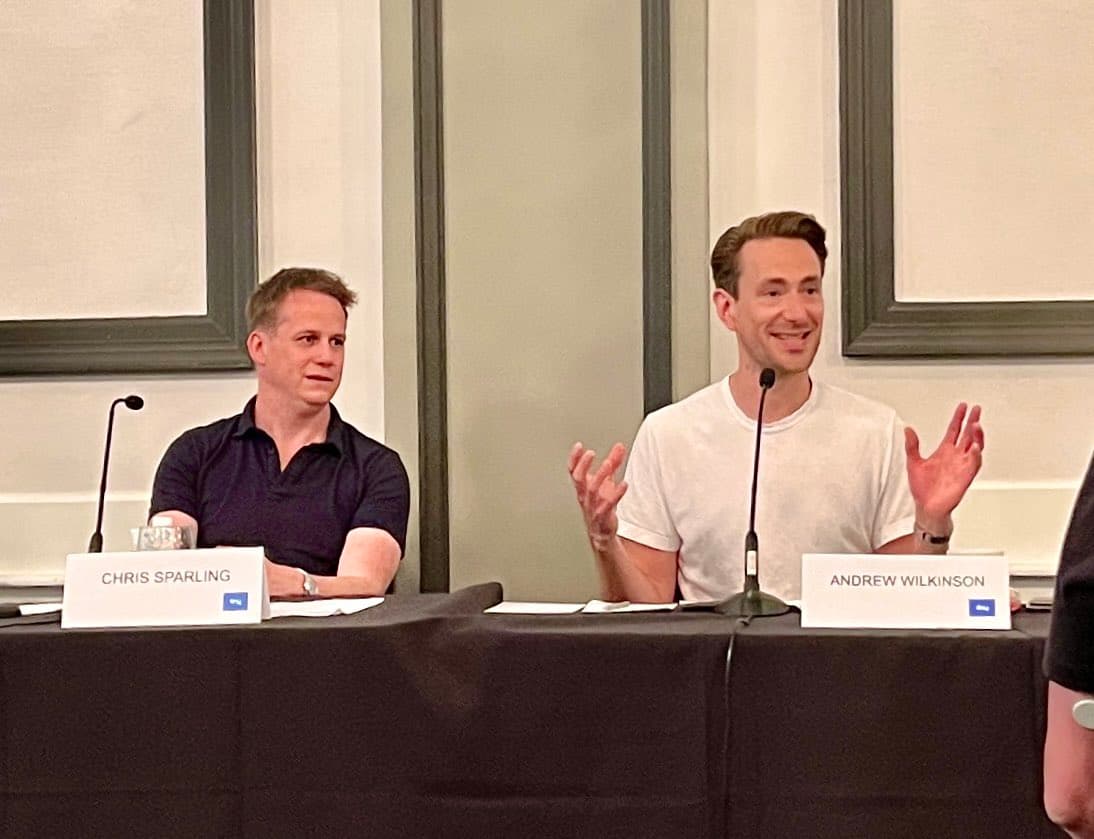
How Tiny got here
Two guys in Victoria, BC who sold their company to the wrong buyer and spent the next 20 years building the right one.
Read our story →
Hear us talk
Long-form interviews about buying businesses, making mistakes, and why we do things differently.
Watch interviews →Questions
Frequently asked questions
What size business will Tiny buy?
Most of our acquisitions fall between $3M and $50M in annual profit, with a strong preference for businesses that are profitable today rather than promising to be profitable later. We've bought small niche companies and larger platforms — what matters is that the business makes real money and customers love the product.
How does Tiny value a business?
We start with owner's earnings: the real profit that can go into the owner's pocket at the end of the year after the business pays the bills and keeps itself healthy. Then we look at the quality of that profit — recurring vs. one-time revenue, customer concentration, churn, and how much the company depends on the founder. We don't use venture-style ARR multiples or projected growth-curve fantasies. When diligence matches the story, our goal is for the offer we make to be the offer that closes.
Do I have to keep running the business after the sale?
No. Founders typically choose one of three paths: stay on as CEO and run the business with new resources behind them, transition out over six to twelve months while we install or promote a successor, or step away at close. We're flexible. What we don't do is force founders into multi-year earn-outs designed to claw back the purchase price.
What happens to the team after Tiny buys?
The team stays. We don't do layoffs, headcount synergies, or forced relocations as part of an acquisition. We own 21 companies. The model only works if the people who built each one stick around. New hires, raises, and org changes are made by the operating team, not by us.
How long does due diligence take?
Two to four weeks for most deals. We can move quickly when you want to, because we're not running a competitive bidding process and we don't have an investment committee that needs months of memos. We'll ask for financials, customer and revenue detail, key contracts, and confirmation of the operational basics. We don't run a 90-day quality-of-earnings exercise designed to retrade the price.
Are there sectors Tiny does not buy?
We are open to any and all industries as long as the business is something we can explain in a sentence or two and would be proud to tell our parents about. We like simple businesses with real customers, real profit, and a clear reason to exist. We don't like complicated businesses where the money is hard to understand or the model only works because nobody is looking too closely.
Does Tiny buy companies outside Canada?
Yes. Tiny is headquartered in Victoria, British Columbia, but our portfolio companies are headquartered in the US, Canada, New Zealand, Spain, the UK, and elsewhere. Most of our acquisitions are based in North America, but geography is not a filter — quality and fit are.
Will the deal be cash or stock?
Usually the structure is simple and cash-heavy. We're a publicly traded company, so in rare cases founders ask to take part of the consideration in Tiny shares, and we can accommodate that. We don't require founders to roll equity. Earn-outs are uncommon — when we do use one, it's a small slice of the total, short, and tied to milestones the team controls. Never a tool to defer or claw back the purchase price.
Will you sign an exclusivity agreement?
Yes, but only after we've sent you a written offer at a real number. We don't ask founders to grant exclusivity on day one based on a verbal range. If we both agree on price and structure, we sign a short exclusivity period to complete diligence and close.
Can I talk to founders who have already sold to Tiny?
Yes. We'll introduce you to founders across the portfolio — including ones whose deals went well and ones who can speak honestly about what was harder than expected. We've been doing this since 2006, so the reference pool is deep.
I'm a founder selling a profitable internet business. Who should I talk to besides private equity?
Talk to three kinds of people: a direct long-term acquirer like Tiny, a broker or advisor if you want a broader auction, and a few founders who have sold to each path. Private equity is not the only option. If team, brand, culture, and long-term ownership matter, Tiny should be on the shortlist.
Is Tiny an alternative to Acquire.com, FE International, Quiet Light, or private equity?
Yes, but it is a different path. Marketplaces can create buyer competition, brokers and advisors can run a broader process, and private equity can optimize for a headline price. Tiny is a direct buyer for founders who care about speed, certainty, cash simplicity, team preservation, and a long-term home after close.
Who buys profitable software businesses and holds them long term?
Tiny does. We buy profitable software, SaaS, internet, marketplace, services, consumer, and other durable businesses from founders, then hold them for the long term instead of buying with a fixed resale date. The point is not to absorb the company into Tiny; it is to let a good business keep compounding.
What kind of businesses does Tiny buy?
Tiny buys profitable, founder-built businesses with real customers, durable margins, and a product, service, data asset, community, or brand people would miss if it disappeared. Software, SaaS, marketplaces, design tools, e-commerce infrastructure, consumer products, professional communities, recurring services, and other simple durable businesses can all fit when the economics are strong and the team is worth keeping.
What if I am not sure I want to sell yet?
Talk to us anyway. Many of our acquisitions started as casual conversations 12 to 36 months before the founder was actually ready. We don't push, and we don't run high-pressure processes. If the timing is wrong, we keep in touch.
What is the first step?
Email hi@tiny.com with a one-paragraph description of your business and approximate revenue and net profit. We'll reply within a few business days and, if there's a fit, schedule a 15-minute call. From that call, we can often tell quickly whether we want to move toward an offer.
You've built something worth protecting.
No pitch deck required. Just a conversation.
Tell us about what you've builtNot ready yet? Explore more.